
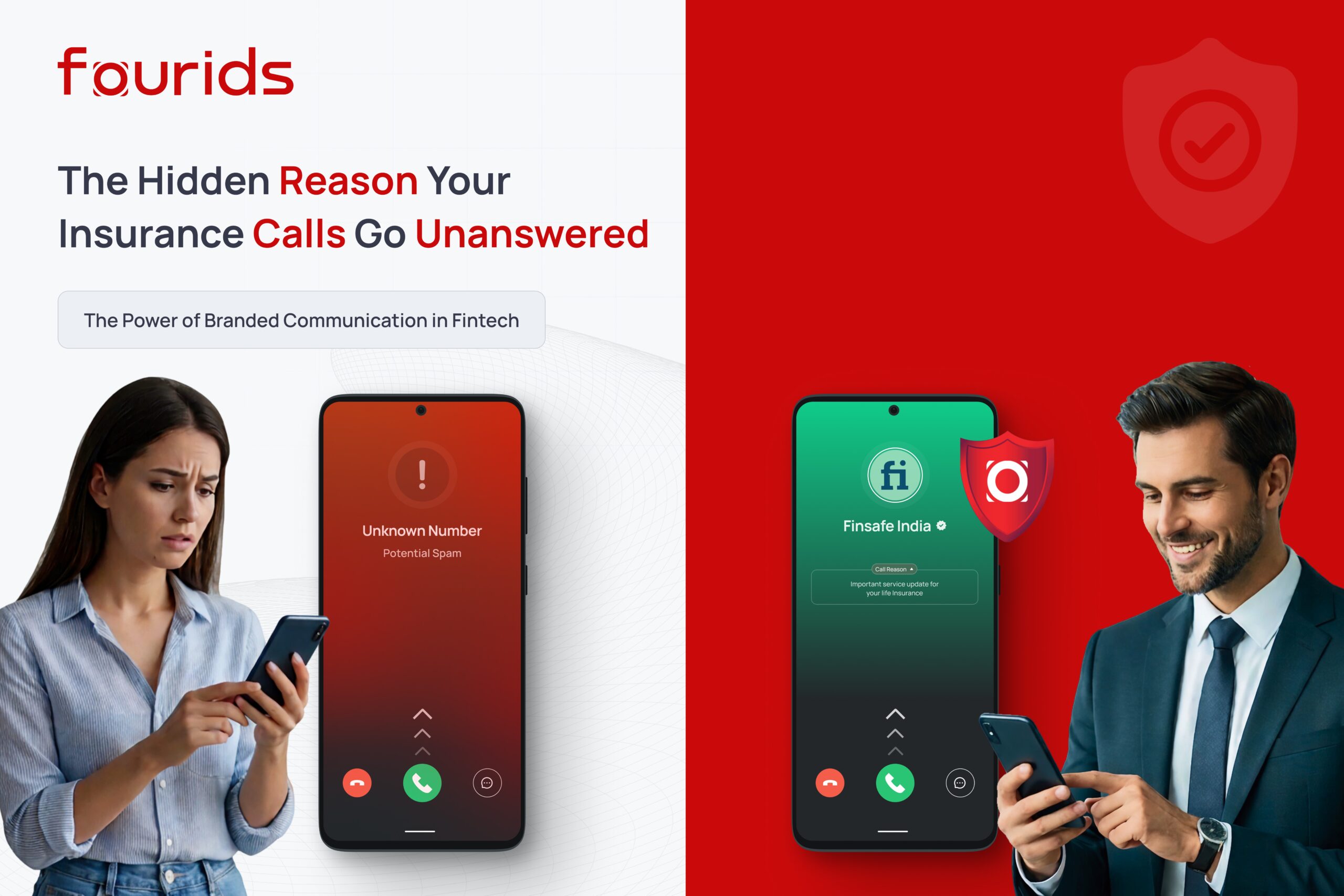
As you all know, insurance runs on conversations. A policy is explained over a call. A renewal is secured over a call. A claim is validated over a call. Yet today, many of those calls never turn into conversations because customers simply do not answer.
If you are running operations or digital transformation for an insurance firm, you probably know the drill. You watch your agents dial the same number four times just to confirm a simple claim, only to realize your perfectly legitimate business call is being screened like a telemarketing scam. This isn’t just a minor annoyance anymore; it is a direct hit to your renewal rates and a massive drag on your turnaround times. Branded calling is the straight line through all that noise, ensuring your team spends more time closing files and less time fighting a “Potential Spam” label.
In short: Insurance customers often ignore calls from unknown numbers because fraudsters impersonate insurers and financial institutions, and high-volume calling can get genuine numbers labelled as spam. This delays policy renewals, claim document verification and KYC calls. Branded calling displays the insurer’s verified name on the customer’s screen, so renewal, claims and compliance calls are recognised and answered, and it supports outbound calling compliance by strengthening transparency at the point of contact.
Why don’t customers answer insurance calls?
Customers are not ignoring insurers out of indifference. They are avoiding risk.
Fraudsters frequently impersonate financial institutions and insurance brands. When a call appears as an unknown number or worse, flagged as spam, customers hesitate. Even loyal policyholders choose caution over convenience.
This hesitation impacts multiple workflows:
- Renewal reminder calls go unanswered
- Claim document verification gets delayed
- KYC and consent requirements for outbound calls in India take longer to complete
- Cross sell and upsell opportunities disappear
When legitimate calls are marked as spam, the issue shifts from performance to reputation. At that point, it becomes a caller ID reputation management problem, not just a contact center metric.
Insurance companies cannot afford that erosion of trust.
How does spam detection in India affect insurance calls?
The algorithms living inside our phones are basically overprotective bodyguards. They are constantly scanning for weird call patterns and high complaint volumes, and they have zero hesitation when it’s time to pull the trigger on a spam tag.
The trouble is that even your most honest campaigns can look like trouble to these filters if you are calling at scale. Once your number gets that dreaded label, your answer rates will drop off a cliff, turning a perfectly compliant outreach strategy into a total ghost town.
This is where operational discipline intersects with identity management:
- Predictable number pools
- Transparent calling practices
- Telecom level verification
- Enterprise number reputation monitoring
Without these controls, even well intentioned insurers risk call blocking issues for enterprises.
What is branded calling for insurance companies?
Branded calling is a verified caller ID solution that displays the insurance company’s official name and sometimes logo on the recipient’s screen during an outbound call.
Instead of showing only a 10 digit number, the mobile screen displays the registered business identity. In India, this is increasingly aligned with carrier verified calling frameworks and initiatives such as TRAI 1600 series compliance.
For insurers, this means:
- Business name display on calls
- Clear differentiation from unknown numbers
- Stronger enterprise caller identity
- Reduced probability of being perceived as spam
Branded calling is not just cosmetic branding. It is a telecom level identity validation process that connects your licensed insurance entity to your outbound numbers.
How does branded calling improve answer rates for insurers?
Think about the last time your phone rang from an unknown number. You probably paused for a second. You may have even let it ring out and waited for a message.
Now imagine the same call, but your screen clearly shows the name of your insurance company. The reaction is different. You immediately place it in context. It could be your renewal reminder. It could be an update on your claim. It feels connected to something you already have. That small shift in recognition changes behaviour.
In insurance, where timing and trust are closely linked, that recognition plays out across some very specific moments in the customer journey.
How does branded calling help policy renewal calls?
Renewal periods are rarely calm. Customers are comparing premiums, reviewing coverage, and sometimes questioning whether they even need the policy anymore. If a renewal call comes from an unknown number, it often gets ignored simply because it feels interruptive.
When the insurer’s name appears clearly on the screen, the call feels relevant instead of random. The customer understands that it is probably about their existing policy, not a cold sales pitch. Persistency ratios are not only about pricing. They are also about whether you manage to speak to the customer at the right time.
How does branded calling speed up claims processing?
Claims are rarely filed in happy circumstances. Customers may already be stressed due to an accident, hospital visit, or property damage. When a call comes in asking for documents or clarification, an unknown number can add another layer of doubt.
If the screen clearly shows the insurer’s name, the customer does not need to second guess the legitimacy of the conversation. They are more likely to pick up and resolve the issue in that moment rather than postponing it.
In day to day operations, that translates into:
- Quicker document collection
- Fewer missed callbacks
- Shorter overall settlement timelines
It also changes the tone of the interaction. When customers feel confident about who is calling, they are more open and cooperative. That matters during sensitive claim discussions.
Why does branded calling matter for KYC and verification calls?
Insurance is tightly regulated. Calls related to KYC updates, disclosures, and recorded confirmations are not optional formalities. They are legal requirements.
The challenge is that these calls can feel procedural to customers. If they come from an unrecognized number, people may assume it is a marketing attempt and ignore it. When the insurer’s verified name appears on the screen, the call carries more weight. It feels official. It signals that this is part of a legitimate process tied to their policy.
How does branded calling support insurance calling compliance in India?
In India, outbound calling frameworks are evolving. TRAI 1600 series compliance has introduced structured numbering for promotional and service calls. Simultaneously, the DPDP Act implications for outbound calling are forcing enterprises to rethink consent, transparency, and data usage.
For insurance companies, this means outbound voice communication must meet three conditions:
- Clear identity
- Valid consent
- Traceable compliance
Branded calling aligns well with enterprise calling compliance India requirements because it strengthens transparency at the point of contact.
What is the real outcome of branded calling for insurers?
Insurance has always been a relationship business. Policies may be purchased online, compared on aggregators, or renewed through apps, but the moments that truly shape customer loyalty still happen in conversation. A renewal reminder explained properly. A claim update delivered with empathy. A compliance call handled clearly and respectfully. These are the interactions customers remember.
When those conversations do not happen because calls are ignored or flagged, the issue is not reach, it is recognition. Making your identity visible gives the conversation a fair chance to begin.
Fourids helps insurance enterprises enable verified, branded calling so your business name appears clearly on every outbound call, improving answer rates and protecting trust where it matters most.
Frequently asked questions
Why do customers ignore calls from insurance companies?
Customers are not ignoring insurers out of indifference. They are avoiding risk. Fraudsters frequently impersonate financial institutions and insurance brands. When a call appears as an unknown number or worse, flagged as spam, customers hesitate.
Why do genuine insurance calls get marked as spam?
The algorithms living inside our phones are constantly scanning for weird call patterns and high complaint volumes. Even your most honest campaigns can look like trouble to these filters if you are calling at scale.
What is branded calling for insurers?
Branded calling is a verified caller ID solution that displays the insurance company’s official name and sometimes logo on the recipient’s screen during an outbound call. It is a telecom level identity validation process that connects your licensed insurance entity to your outbound numbers.
How does branded calling help policy renewals?
When the insurer’s name appears clearly on the screen, the call feels relevant instead of random. The customer understands that it is probably about their existing policy, not a cold sales pitch.
How does branded calling help with insurance claims?
If the screen clearly shows the insurer’s name, the customer does not need to second guess the legitimacy of the conversation. They are more likely to pick up and resolve the issue in that moment rather than postponing it.
What does outbound calling compliance mean for insurers in India?
For insurance companies, outbound voice communication must meet three conditions: clear identity, valid consent and traceable compliance. Branded calling aligns well with these requirements because it strengthens transparency at the point of contact.